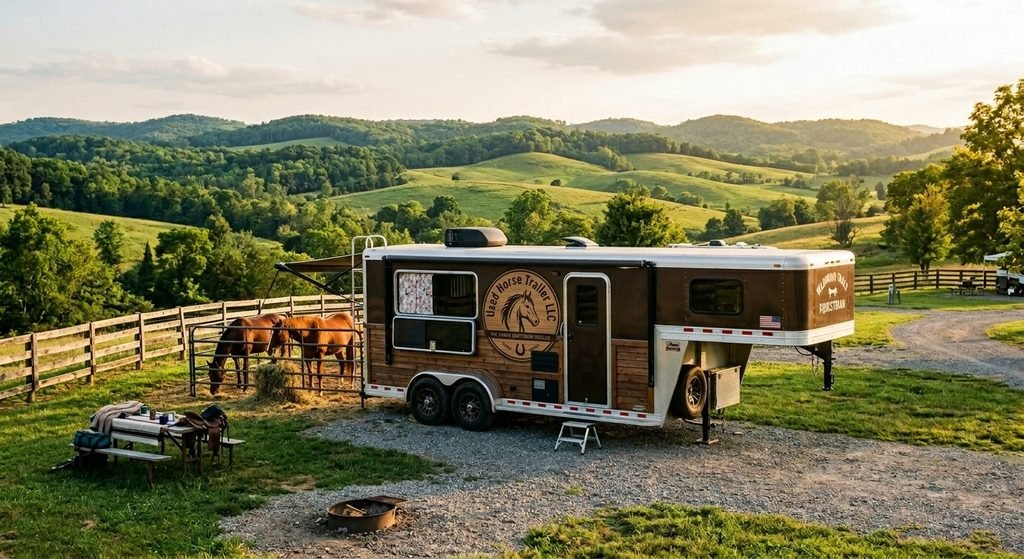
Let’s face it: brand-new living quarters (LQ) horse trailers come with sticker shock that can make any seasoned rider wince. With fresh models easily clearing the $60,000 to well over $100,000 mark, buying used horse trailers has become the go-to strategy for eventers, trail riders, and rodeo competitors who want the comfort of a weekend cabin without emptying their savings account.
At Used Horse Trailer LLC, we see plenty of buyers hunting for that diamond-in-the-rough used gooseneck. But a used LQ trailer combines the mechanical complexities of a heavy-duty towable with the RV systems of a compact motorhome. If you don’t know what you’re looking at, a cheap initial price tag can quickly balloon into a massive repair bill.
Before you hand over your hard-earned cash, here is a practical, no-nonsense checklist of what to inspect when buying a used horse trailer with living quarters.
1. Start from the Ground Up: Frame, Floor, and Axles
Before you even step foot inside the camper door, crawl underneath the trailer. This is where neglect hides best.
- The Subfloor: Pull back any rubber mats in the horse area. If it’s an aluminum floor, look for white powdery corrosion or pitting caused by trapped urine and moisture. If it’s wood, look for soft, spongy spots, especially near the rear doors where water splashes up. Replacing a rotted floor is labor-intensive and expensive.
- Frame Rust vs. Surface Rust: Surface rust on steel frames is normal and easily wire-brushed away. However, deep flaking, structural pitting, or rusted-through cross-members mean the structural integrity has been compromised. Pass on anything with frame rot.
- Axles, Brakes, and Bearings: Look at the leaf springs and shackles for heavy rust or cracking. Ask when the wheel bearings were last packed and check the brake assemblies. If you’re buying a heavy gooseneck LQ, you want absolute confidence in the stopping power.
2. Test the RV Systems (Before You Assume They Work)
Many sellers haven’t used their trailer in six months to a year. Never take a seller’s word that “everything worked when we parked it.”
- Plumbing and Water Lines: Ask if the trailer has been properly winterized. If water was left in the lines during a hard freeze, the PEX piping or water pump might be cracked. Hook up a hose or fill the fresh tank, turn on the pump, and check every faucet, the shower, and the toilet for leaks.
- AC and Heating Units: Roof-mounted air conditioners draw a lot of power. Plug the trailer into a proper 30-amp or 50-amp source and let the AC run for at least 15 minutes to ensure it actually cools. Likewise, test the propane furnace—listen for the igniter to click and make sure it blows hot air without tripping safety codes.
- The Refrigerator: RV fridges can take hours to cool down, so check them early in your walkthrough. Make sure it runs smoothly on both electric and propane modes.
3. Check the Roof and Seams for Water Intrusion
Water is the silent killer of RV conversions and living quarter trailers.
Climb up a ladder and inspect the roof seams, vents, and around the air conditioner shroud. Look for cracked lap sealant, bubbling wallpaper inside the LQ, or musty smells near the nose of the gooseneck. A soft ceiling or sagging wall panels usually points to a chronic roof leak that will require tearing out panels to fix properly.
4. Don’t Ignore the Tow Vehicle Connection
A used gooseneck trailer with living quarters is significantly heavier than a standard bumper-pull or straight-load trailer.
- The Gooseneck Coupler & Safety Chains: Inspect the gooseneck ball coupler for excessive wear, and make sure the latching mechanism locks down securely with zero play.
- The Breakaway Battery: Test the emergency breakaway system. Pull the pin, and verify that the trailer brakes lock up immediately. If the battery is dead, budget for a replacement before you tow it off the lot.
- Tire Age Over Tread Depth: A tire can have 80% tread remaining and still be a catastrophic blowout risk if it’s more than 5 to 6 years old. Check the 4-digit DOT date code on the sidewall. If those tires are ancient, factor a brand-new set of heavy-duty, trailer-rated (ST) tires into your budget.
Final Thoughts: Buy with Eyes Wide Open
A used living quarters trailer can open up a world of comfortable weekend stays at rodeos and trail rides, provided you inspect it thoroughly. Take your time, check the roof, test every switch, and don’t be afraid to walk away if the mechanical or structural red flags start piling up.
Have questions about specific trailer floor plans, or need help finding the right rig to fit your towing capacity? Stop by Used Horse Trailer LLC or give our team a call—we’re always happy to talk trailers.